
Nasal Product Testing
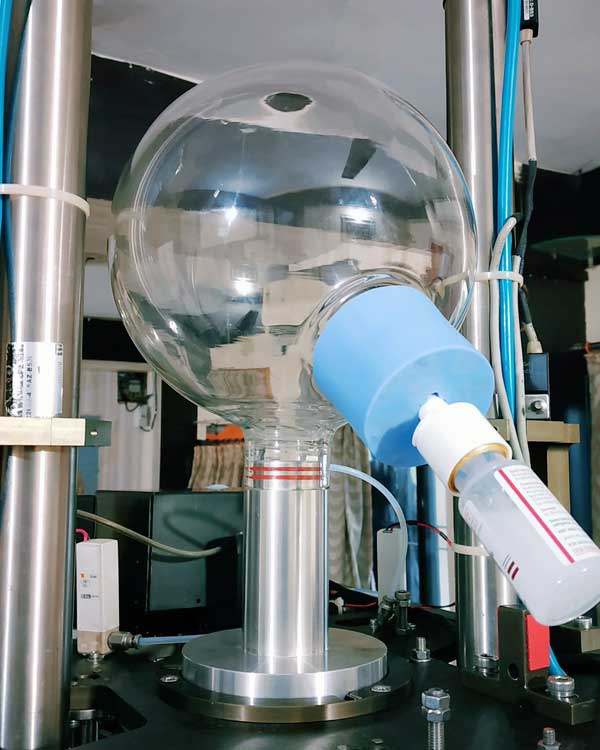
Nasal sprays deliver medication directly into the nasal passages to treat conditions such as allergies, nasal congestion, sinus infections and some hormonal imbalances. The spray disperses the medication as a fine mist, which is absorbed quickly through the nasal mucosa.
Nasal sprays can contain decongestants, antihistamines, corticosteroids and saline solutions, and are available both over the counter and by prescription depending on the formulation and intended use.
Why nasal products are tested
- Droplet and particle size govern where in the nasal cavity the dose deposits.
- Delivered dose per spray must stay consistent across the life of the container.
- Spray technique and actuation force change the plume, so both need controlling.
- Allergic rhinitis, congestion and sinus products all require documented performance data.
How we test nasal products
The A3G switches from oral to nasal configuration in minutes. In the nasal configuration it uses a glass expansion chamber, available in 2 L and 5 L, and counts the number of nasal sprays injected into the chamber.
As with pMDI testing, shaking and actuation parameters are programmable and the whole sequence — dosing, solvent injection, washing and drying — runs unattended.
Equipment used
- A3G — Automated Andersen Cascade Impactor, nasal configuration
- PRANA — automated pMDI and nasal shaker, actuator and doser
- 2 L and 5 L glass expansion chambers
- Silicone mouthpiece and nosepiece adapters