
pMDI Testing
Pressurised metered dose inhalers, commonly known as pMDIs, are handheld devices that deliver a specific amount of medication to the lungs in the form of an aerosol. They are one of the most common forms of inhalation therapy, known for their effectiveness, ease of use and portability.
Why pMDIs are tested
- Precision dosing — each actuation must deliver a consistent dose, so delivered dose uniformity has to be demonstrated.
- Aerodynamic particle size distribution determines how much of the dose reaches the lung rather than the throat.
- Shaking and actuation technique changes the result, so both must be controlled and repeatable.
- Regulatory submissions require APSD and DDU data generated under controlled, traceable conditions.
How we test pMDIs
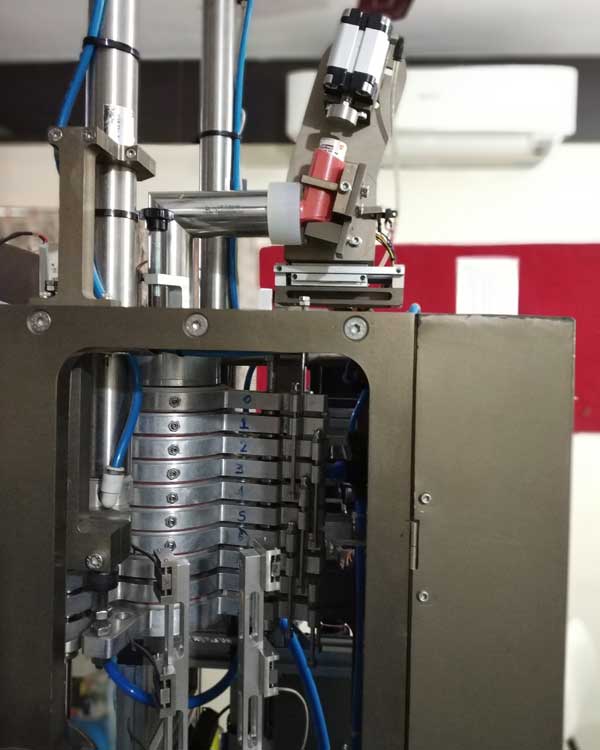
The A3G runs the complete pMDI workflow without an operator touching the impactor. The built-in shaker/actuator agitates and discharges the inhaler into the USP induction port, and the shake angle, acceleration, deceleration, velocity, shake count, actuation count and actuation force are all user programmable.
Sampling, two washes and drying complete in 20 to 25 minutes per APSD test, giving a throughput of up to 24 APSDs in eight hours. Flow rate is set with an integrated mass flow controller and held within 1% to 2%.
Published results
Testing with Flovent HFA (fluticasone propionate, 220 mcg label claim) conducted with Zydus Cadila Healthcare achieved mass balance between 96.7% and 105.3% of label claim across twelve APSD tests. The work was published in EC Pulmonology and Respiratory Medicine, Volume 9 Issue 1.
Equipment used
- A3G — Automated Andersen Cascade Impactor, pMDI configuration
- PRANA — automated pMDI shaking, actuation, weighing and flow control
- CHAKRAVAT — programmable shaker for induction ports, mouthpiece adapters and DUSA tubes
- Eight stage non-viable cascade impactors in 316 stainless steel or aircraft grade aluminium